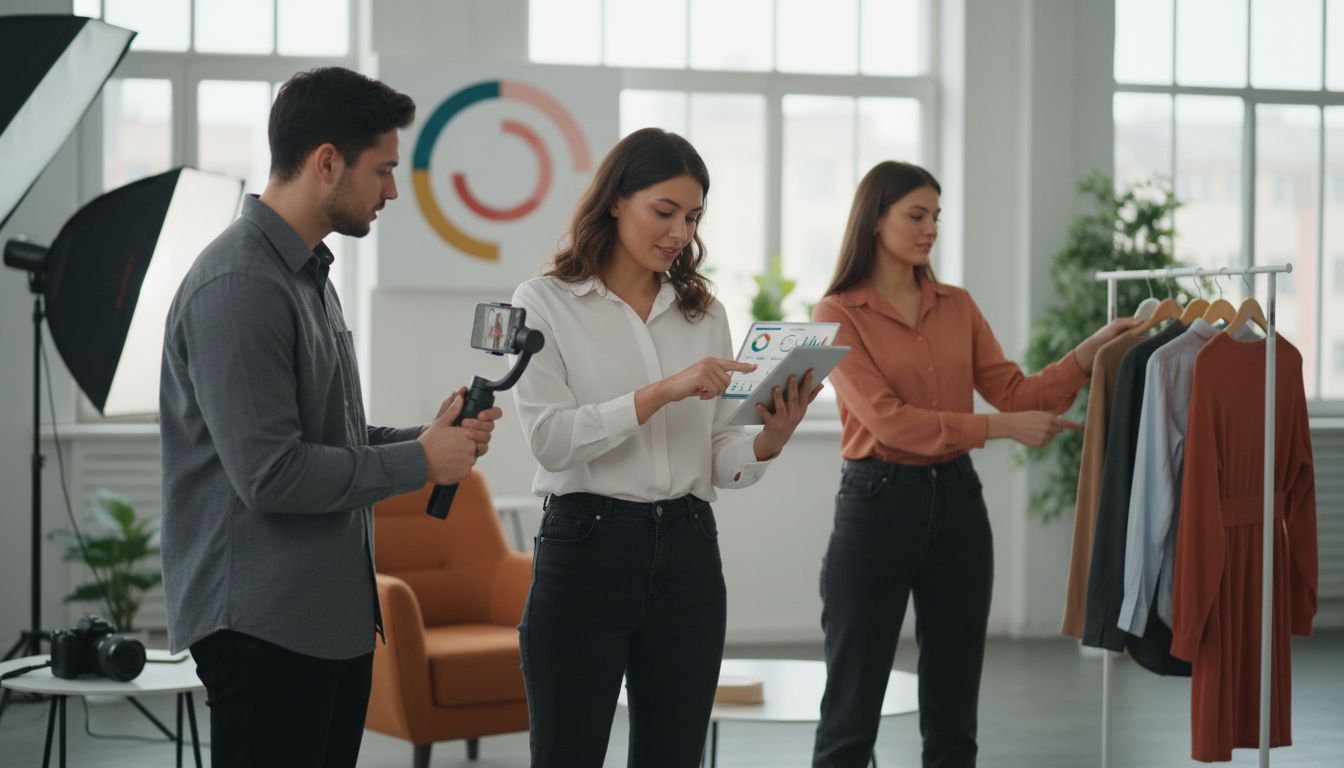
Creator partnerships have moved far beyond awareness campaigns and one-off sponsored posts. For brands that need measurable growth, the opportunity now sits at the intersection of short-form video, live shopping, and performance-based compensation. This shift matters because platforms are making commerce native to content, while audiences are becoming more comfortable discovering, evaluating, and buying products without ever leaving the experience.
For small and medium businesses, startups, and growth-focused brands, this opens a more efficient path to conversion. Instead of treating creators as a top-of-funnel channel only, smart marketers are building systems where creators drive discovery, proof, traffic, and sales across the full funnel. The brands winning here are not simply hiring influencers. They are designing creator commerce engines with the right formats, the right incentives, and the right measurement layer from day one.
Creator partnerships are now a conversion channel
The biggest strategic change in creator marketing is simple: creators are increasingly being used in a shopping and commerce context, not just for reach. EMARKETER senior analyst Minda Smiley noted that creators are now being used across the full funnel, and that shift is showing up in both platform product roadmaps and brand investment patterns. For businesses looking to scale efficiently, this means creator programs should be planned like revenue channels, not experimental brand spend.
The budget signals support that change. According to impact.com’s 2025 research, 59% of brands plan to dedicate at least 25% of their affiliate budgets to creator partnerships, while 18% intend to allocate more than 50% of their affiliate program budget to creators. That is a major shift in how performance teams view creators: not as a separate social tactic, but as a measurable partner type inside acquisition strategy.
The value is also becoming more operationalized. Retailers are launching repeatable creator programs instead of renegotiating every campaign from scratch. EMARKETER reported that David’s Bridal’s Style Squad pays creators 5% to 15% commission on net sales, with top performers eligible for up to 20%, while Pacsun launched PS Community Hub to support an always-on pipeline of content and affiliate earnings. For brands that want predictable growth, this is the model to study: structured, ongoing, and tied to outcomes.
Short-form video is the scalable entry point to creator commerce
Short-form video has become the highest-volume layer in creator commerce because it combines speed, native reach, and easy product storytelling. During TikTok Shop’s 2025 Black Friday/Cyber Monday period, creator affiliates posted nearly 10 million shoppable videos. That number is important not just because it is large, but because it shows short-form commerce is now a scale game. Brands are no longer betting on a handful of hero assets. They are building broad testing portfolios of creator content.
Discovery behavior makes this format especially powerful. TikTok reported that 83% of TikTok Shop shoppers say they discover new products on the platform, based on GlobalData research cited in its 2025 holiday update. That means creators do not have to force a hard-sell message. They can lean into native formats like demos, before-and-after clips, unboxings, GRWM videos, and problem-solution storytelling that feel natural in-feed while still moving people toward purchase.
Platform investment suggests short-form supply will keep expanding. YouTube announced new Shorts creation tools in 2025, including an improved editor, beat-syncing, better templates, image stickers, and AI stickers. It also said Shorts creators will be able to add a link to a brand’s site specifically for brand deals. For marketers, this tightens the path between endorsement and action, making short-form video more measurable and more conversion-friendly than it was even a year ago.
Live shopping compresses trust, urgency, and checkout
Live shopping works because it removes the delay between interest and action. A potential buyer can see the product, ask questions, hear objections addressed in real time, and check out in the same session. That compression of trust, demonstration, and conversion is what makes creator-led live shopping especially powerful for categories where fit, texture, use case, or visible proof matters.
The performance numbers are becoming hard to ignore. During TikTok Shop’s 2025 Black Friday/Cyber Monday period, brands and sellers hosting livestreams saw 84% sales growth year over year. Shoppers watched more than 760,000 livestream sessions, and those streams generated over 1.6 billion views. Live shopping is no longer just a novelty format for entertainment-led commerce. It is proving it can convert at scale.
The growth outlook remains strong beyond seasonal peaks. EMARKETER forecast that US livestreaming retail ecommerce sales will rise 35.0% to $19.76 billion in 2026. TikTok’s Patrick Nommensen captured the deeper reason this format performs when he said, “Live Shopping is where brand love starts,” adding that real-time interaction builds trust, strengthens community, and turns interest into long-term loyalty. For brands, that means live shopping should not be treated as a one-off event. It should be built into a recurring creator commerce calendar.
Performance-based pay aligns incentives and improves efficiency
If creator partnerships are expected to convert, compensation has to support that goal. Performance-based pay creates a cleaner alignment between brand outcomes and creator upside. Instead of relying only on flat fees, brands can build hybrid models that include affiliate commissions, revenue share, bonuses for threshold performance, and selective fixed payments for content production. This structure rewards creators not just for posting, but for influencing action.
The market is already moving in this direction. impact.com describes the hybrid creator-affiliate model as applying proven affiliate performance logic to creators so every post, link, and recommendation is measurable, scalable, and revenue-driving. Its 2025 creator payment playbook also notes that creator-affiliate convergence is driving 46% higher sales. That is a strong signal that performance-based structures are not simply a finance preference; they can materially improve campaign output.
Format-specific compensation is also becoming essential. impact.com points out that creators may perform differently on algorithm-based formats like TikTok and Reels versus click-optimized placements like Instagram Stories and YouTube videos. A smart payment framework reflects that reality. For example, a brand might use flat fee plus affiliate for a high-reach short-form creator, while leaning more heavily on commission for creators whose audiences click and buy through longer-form content or direct links.
Long-term creator relationships outperform one-off activations
One of the most overlooked drivers of creator conversion is continuity. Repeated exposure builds familiarity, and familiarity improves action. That is why the most effective creator programs increasingly favor longer partnerships over isolated sponsored posts. In the EMARKETER x Spotter Creator Opportunity Survey from January 2025, 37.4% of respondents said finding long-term creator partnerships and ambassadors would add the most value to their creator program.
The platform-level evidence reinforces this. EMARKETER, citing Agentio’s January 2026 analysis of more than 10,000 mostly US-based YouTube creator integrations from October 2023 to December 2025, reported that longer partnerships generate higher affiliate link clickthrough rates. This makes intuitive sense: when a creator talks about a brand repeatedly, the endorsement feels more credible, the audience has more chances to convert, and the creative gets better as both sides learn what resonates.
Longer-term relationships also help brands build tiered creator communities. According to impact.com’s 2025 payment playbook, leading brands often find that 5% to 15% of creators become high performers generating 80% of revenue. That is a compelling argument for always-on testing followed by performance-based scaling. Start broad, identify the creators who can truly sell, and then deepen those partnerships rather than constantly restarting the search process.
Persistent content keeps converting after launch
Unlike many forms of paid media, creator content can keep working long after the campaign goes live. This is especially true on YouTube, where integrations are native to the content and remain live as part of the video’s organic distribution over time. Agentio’s methodology, as summarized by EMARKETER, highlights this persistence as a key reason performance-based creator deals can keep compounding after launch.
YouTube is particularly important in this conversation because shopping intent on the platform is already massive. The company said people watched over 30 billion hours of shopping-related videos in 2023. It also reported that YouTube Shopping GMV grew 5x year over year and that more than 500,000 creators were enrolled globally as of July 2025. For brands, that means creator content on YouTube can drive both immediate traffic and longer-tail conversion value through evergreen discovery.
YouTube is also reducing friction between content and commerce. It introduced a creator partnerships hub inside Google Ads to help brands and agencies find relevant creators, and said AI will help suggest creators who may fit a brand. It is also using AI to identify the optimal moment a product is mentioned and display a product tag then, with plans to test automatic identification and tagging of eligible products in videos. These features move creator partnerships closer to a full performance media workflow.
Conversion improves when creator content is reused deeper in the funnel
The highest-performing brands do not stop at the original post. They repurpose creator content into the places where conversion decisions are actually made. Gap’s 2026 playbook is a strong example. Cory Weaver said creator partnerships are sometimes “really direct” via affiliate links that drive traffic or sales, and other times indirect through content reused on paid media and product pages. That is the right mindset: creator content should be designed as an asset, not just a placement.
Embedding creator proof into ecommerce surfaces is especially powerful. Weaver said, “The utility of creator content [means] we are absolutely weaving it into our PDPs,” and added that the company is seeing “wonderful success there.” For brands with traffic but low product page conversion, this is a major opportunity. Creator videos can answer buyer questions, show real-world usage, and reduce hesitation at the point of decision.
This pattern extends beyond ecommerce sites. Pinterest recently positioned creator content as performance media in a Dermstore case study, where the brand combined creator-made routine videos with Performance+, Pinterest’s AI optimization suite, to target high-intent shoppers most likely to convert. The takeaway is clear: when creator content is integrated into paid distribution and conversion surfaces, it can influence results far beyond the original social post.
How to build a creator partnership model that converts
Start with a full-funnel structure instead of a single campaign brief. Use short-form video for discovery and creative testing, live shopping for high-intent conversion moments, and evergreen long-form or persistent platform content for compounding performance. This layered approach reflects how people actually buy: they discover through repeated exposure, validate through proof and demonstration, and convert when friction is low.
Next, build your compensation model around format and outcome. Use hybrid pay structures where appropriate, such as flat fee plus affiliate, tiered commission based on sales volume, or revenue share for top performers. Since creators have multiple monetization routes on YouTube through Watch Page Ads, Shorts Feed Ads, Memberships, Supers, Shopping, and more, hybrid brand deals are increasingly practical. On the merchant side, infrastructure is improving too: YouTube expanded its Shopify partnership so eligible Shopify Plus and Advanced merchants in the US can join the YouTube Shopping affiliate program through the Google & YouTube app on Shopify.
Finally, measure what matters and build for iteration. Measurement remains the biggest blocker to scale, with 31.7% in the EMARKETER x Spotter survey saying measuring ROI more effectively was their top priority. Track creator-level revenue, assisted conversions, clickthrough rates, content retention, live shopping engagement, product page lift, and paid media performance when creator assets are reused. Then promote winning creators into always-on partnerships. The goal is not just to run influencer campaigns. It is to build a creator commerce system that gets smarter and more profitable over time.
The brands seeing the strongest results from creator partnerships are not choosing between branding and performance. They are combining them. Short-form video expands discovery at scale, live shopping accelerates trust and action, and performance-based pay keeps incentives aligned. Together, these elements create a more accountable and more adaptable growth engine for modern commerce.
For businesses ready to compete in a crowded digital environment, the opportunity is to operationalize creator partnerships with the same rigor used in paid media, affiliate marketing, and conversion optimization. Build long-term relationships, design content for commerce from the start, and reuse creator assets throughout the funnel. That is how creator partnerships convert now, and why creator partnerships that convert are becoming a core part of performance marketing strategy.
